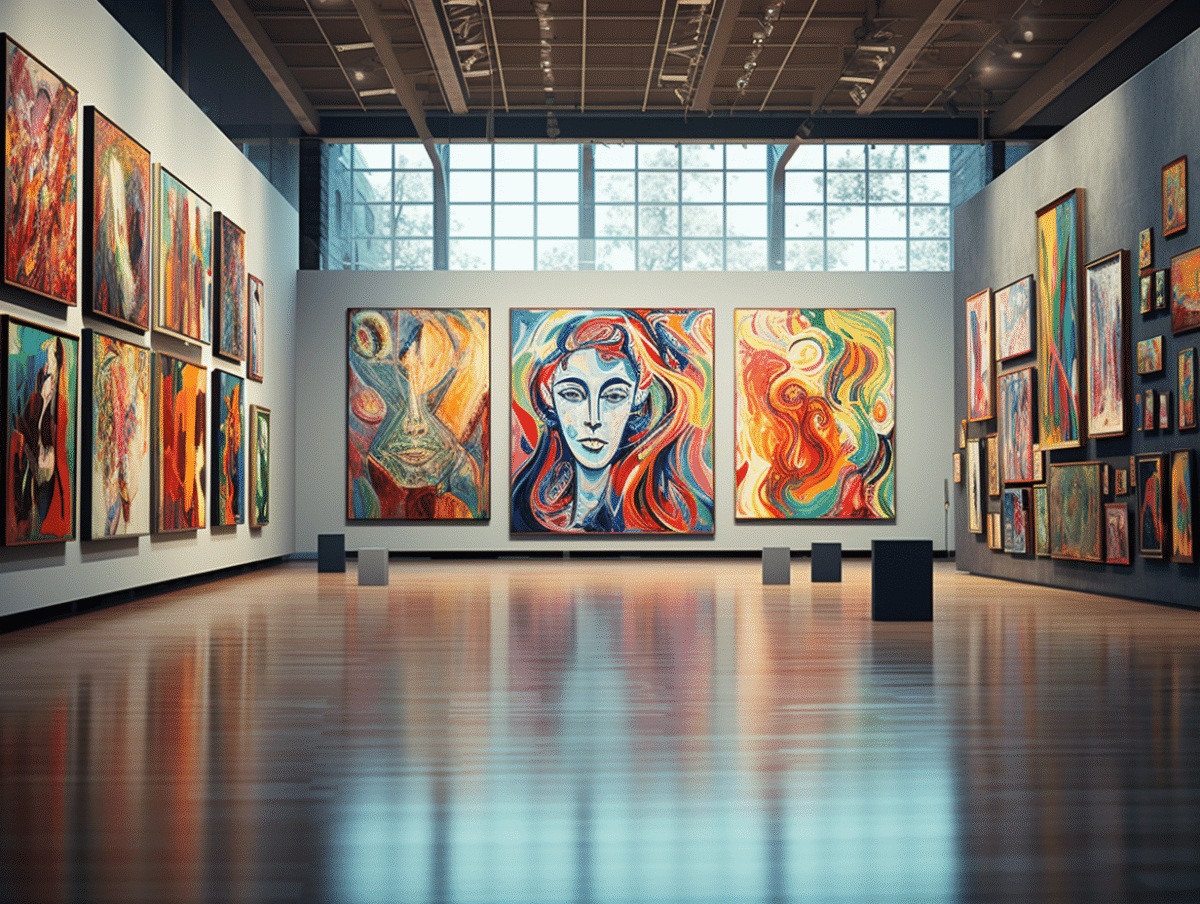
The history of art is marked by movements that have revolutionized the perception and creation of art. These currents, born from specific socio-cultural contexts, have pushed the boundaries of human expression. Realism, Impressionism, Expressionism, Cubism, and many others represent emblematic chapters of a rich and complex chronology. Each of these movements has left an indelible mark, influencing generations of artists to come. Understanding these key movements is to decipher the codes of a universal visual language, to grasp the very essence of humanity’s relentless quest for beauty, meaning, and innovation.
The foundations of art history: key movements and periods
The history of art, in its vast chronology, consists of key movements that structure the understanding of works and their significance. Each artistic movement is a fundamental concept that allows one to place a work in its context, from the Renaissance to contemporary art. The notion of avant-garde, often associated with these movements, characterizes the artists and groups who, in their time, broke with conventions to explore uncharted territories of creation.
Artistic movements are not mere labels; they reflect the social, political, and aesthetic concerns of a given period. They influence and are influenced by literature, philosophy, and major historical events. The Realism of the 19th century, with its detailed painting of everyday life, stands in opposition to romantic idealization, while Impressionism liberates color and light from academic constraints.
The Cubism, revolutionary in its own right, deconstructs traditional perspective and paves the way for an abstraction that questions the very representation of reality. To name just these examples, each movement is part of an evolution, a reaction, or a logical progression in art history. For a deeper exploration, the site 209.fr offers a wealth of information on these currents that have shaped the landscape of modern and contemporary art.
Events such as the Salon d’Automne played a crucial role in the recognition and dissemination of new styles. It was during these gatherings that Fauvism was named, following the art critic who perceived the works of Matisse and his contemporaries as ‘wild beasts’. These historical facts are essential to grasp the impact that artistic movements exert on the development of art.
Detailed exploration of major artistic movements through the centuries
At the heart of painting, Realism stands as a major artistic movement of the 19th century, advocating for a faithful and unembellished representation of everyday life, often with a social consciousness. Realists, through their works, invite a new, more honest look at the world, far from romantic idealizations. They lay the groundwork for an aesthetic that will have a lasting influence on subsequent currents.
Impressionism, for its part, is distinguished by its revolutionary approach to light and color. Impressionist canvases, with their distinct brush strokes and outdoor compositions, capture the ephemeral essence of moments. This movement paves the way for experiments that will lead to modernity in art, where sensory perception takes precedence over realistic representation.
Cubism, initiated by leading figures such as Picasso and Braque, manifests through a fragmentation of form and a radical questioning of perspective. This artistic movement, with its geometric planes and multiple viewpoints, disrupts the way artists conceive of sculpture and painting, and lays the foundations for abstraction. Cubism, through its formal innovations, continues to profoundly mark contemporary art.