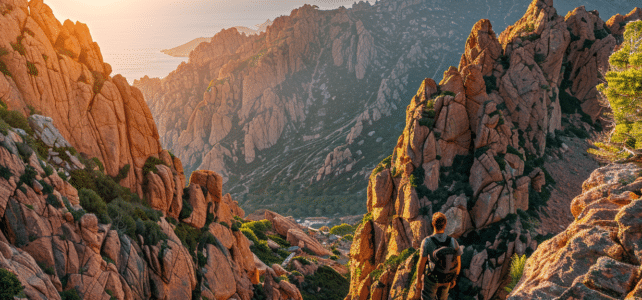
In Corsica, a land of character where nature reigns supreme, hikers are invited to wander through breathtaking landscapes. From the Calanques of Piana, red granite sculptures plunging into the Mediterranean, to the impressive cliffs of Bonifacio, the island’s geological diversity is awe-inspiring. The GR20, a renowned trail, offers an epic crossing where high-altitude lakes, ancient forests, and mountain peaks follow one another. The Scandola Nature Reserve, accessible only by sea or on foot, is another gem, with its volcanic formations and preserved marine wildlife, promising a unique and memorable hiking experience.
Crossing lunar landscapes: the needles of Bavella and the Cuscionu plateau
In the heart of southern Corsica, the needles of Bavella rise majestically, offering an iconic loop hike. These sharp peaks, true sentinels of stone, soar like natural cathedrals. Their granite-carved silhouettes challenge the sky, while the trails wind through wild nature, revealing spectacular views around every bend. At the summit of Punta di Ghjavingnolu, hikers are rewarded with a breathtaking panorama of the surrounding mountains, a sight earned after an ascent where breath mingles with wonder.
Continuing the odyssey towards the vast and mysterious Coscione plateau, the contrast is striking. Here, the horizon opens up to an almost unreal space, where the pozzines, these wet meadows dotted with small water holes, create a landscape of surprising beauty, reminiscent of the most remote regions of Scotland or New Zealand. This ideal hiking spot in Corsica invites exploration along its many trails, such as the water trail and the stone trail, immersing walkers in an atmosphere where nature reigns, and where each step reveals a new wonder.
Quenza, a town near the plateau, serves as a favored starting point for these outdoor excursions. Among the routes, the famous trou de la Bombe in Corsica, or ‘Tafonu di u Cumpuleddu’ in Corsican, is a must-see that piques the curiosity of hikers. This natural phenomenon, a circular opening in a granite block, is the result of millennia of erosion. Mysterious and photogenic, it represents a walking destination as attractive as it is unique, much like the treasures hidden in the mountains of the Isle of Beauty.
From the sea to the mountains: the Gulf of Porto, Capo Rosso, and the Restonica gorges
Along the steep trails of western Corsica, the Gulf of Porto reveals itself as a perfect sketch of Mediterranean nature, blending the deep blue of the sea with the reddish hues of porphyry. A boat trip is the ideal way to embrace this mosaic of colors and grasp the extent of the Calanques of Piana, listed as a UNESCO World Heritage site. These rock formations, sculpted by wind and erosion, rise from the sea like monumental statues, defying time and the elements.
Further south, the promontories of Capo Rosso offer hikers a spectacle of contrasts where the red porphyry, characteristic of Corsica, mingles with endemic vegetation and the deep blue of the Mediterranean. The trails, sometimes airy, lead to breathtaking viewpoints over the coastline and the Scandola Nature Reserve, known for its volcanic cliffs and volcanic organs, remnants of a volcano that has been extinct for 180 million years.
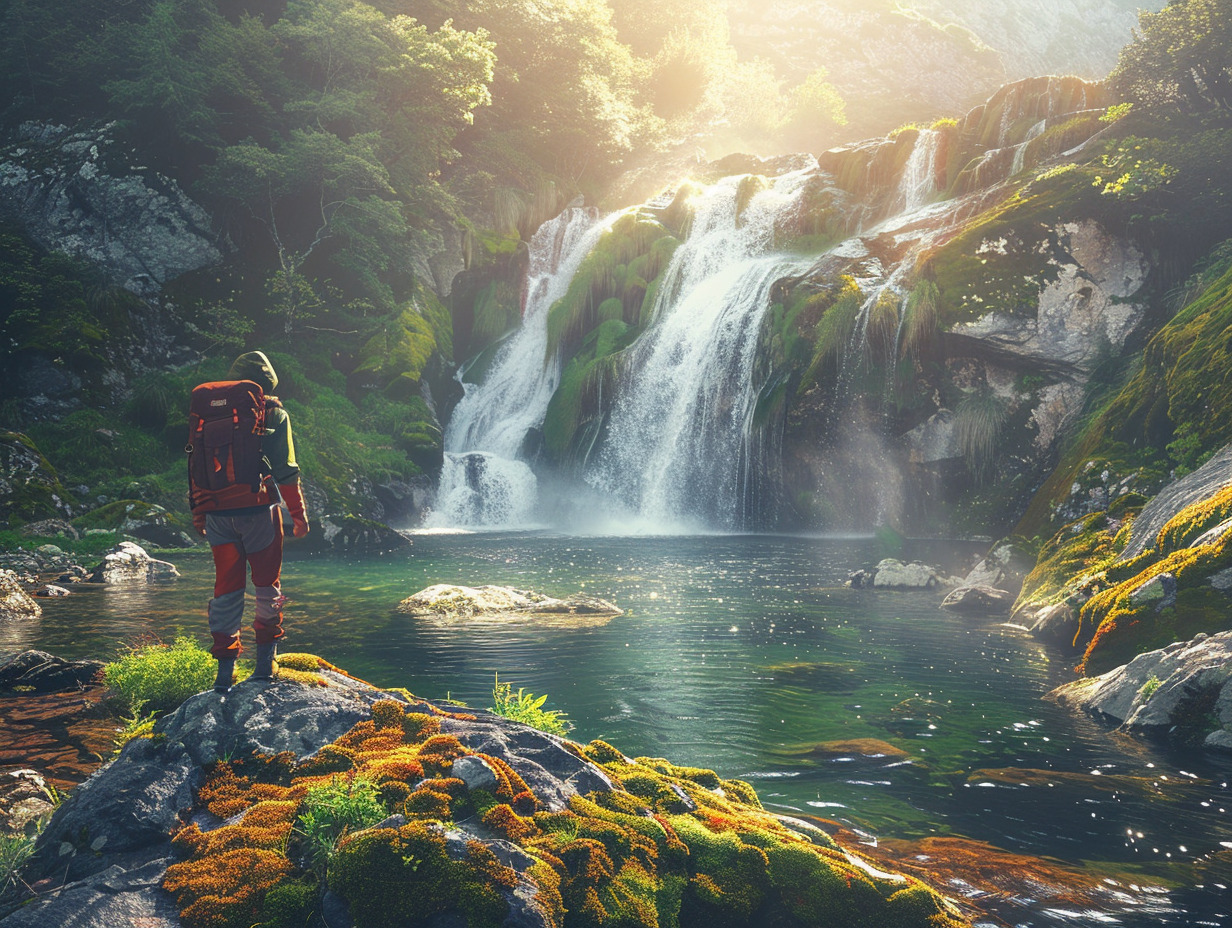
In the heart of the island, the Restonica gorges invite a total immersion in wild and preserved nature. Between refreshing waterfalls and natural pools, the Restonica is the stage for a striking change of scenery as one ascends towards the Melo and Capitello refuges. These gorges, sculpted by the clear waters of the river, are a paradise for lovers of hiking and swimming in the heart of Corsican mountains.