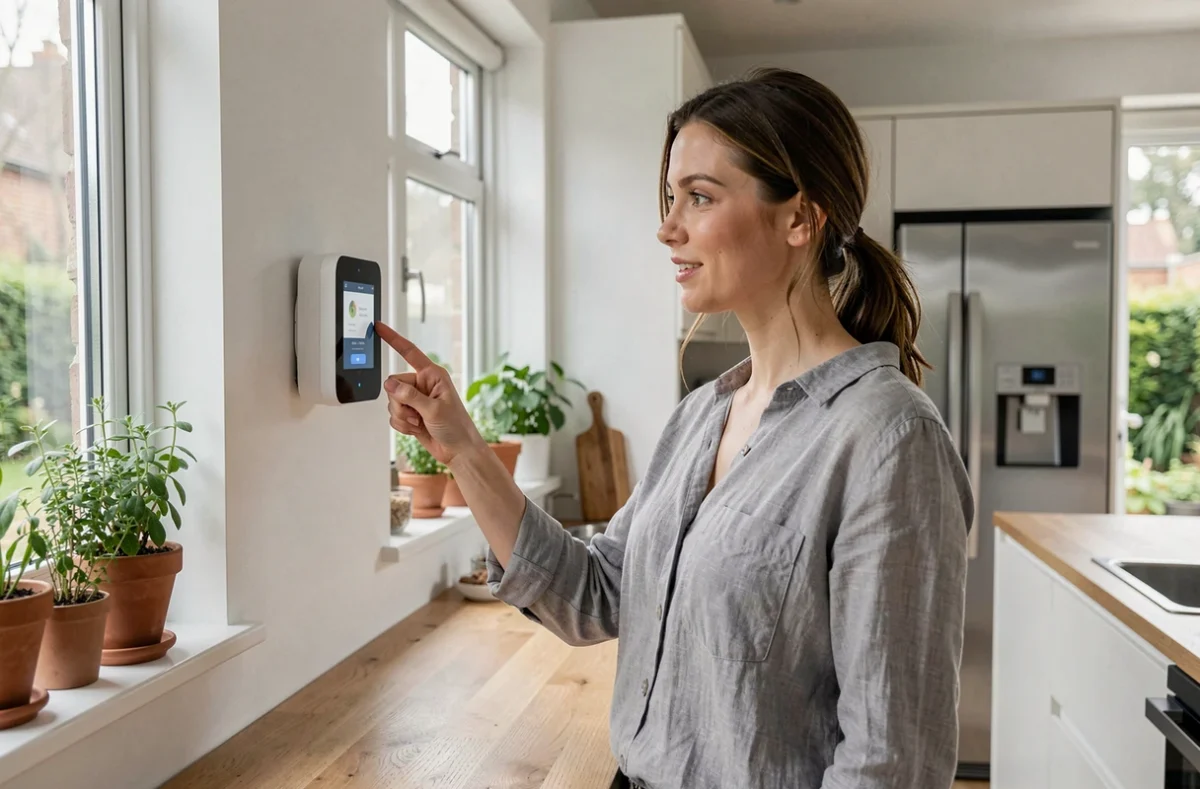
Comparing connected home devices today involves measuring three parameters: the actual interoperability between devices, the level of software security guaranteed by the manufacturer, and the ability to manage energy consumption. These three aspects determine the value of a device far more than the list of its advertised functions. Recent innovations are shifting the focus on each of these criteria, and the gaps between products are widening.
Standard Matter 1.4 and energy management: what changes concretely
The Matter protocol was designed to solve an old problem: enabling connected devices from different brands to communicate without going through a proprietary software bridge. Version 1.4, released in 2025, goes beyond this promise of interoperability.
It introduces features for coordinated energy consumption management. A connected thermostat, motorized shutters, and a water heater can now adjust their operation based on hourly rates, local photovoltaic production, or signals sent by the electrical grid.
This management no longer relies on manually programmed scenarios. The standard allows compatible devices to negotiate load distribution among themselves, representing a change in architecture compared to previous generations. For those considering renewing the equipment offered by Domotica, it covers this type of device compatible with open protocols.
| Criterion | Devices Matter 1.4 | Proprietary protocol devices |
|---|---|---|
| Multi-brand interoperability | Native, without additional bridge | Limited to the manufacturer’s ecosystem |
| Coordinated energy management | Management based on rates and local production | Manual or absent scenarios |
| Security updates | Duration announced at purchase (future CRA) | Variable, often undocumented |
| Local communication (without cloud) | Possible via Wi-Fi/Thread | Depends on the manufacturer |
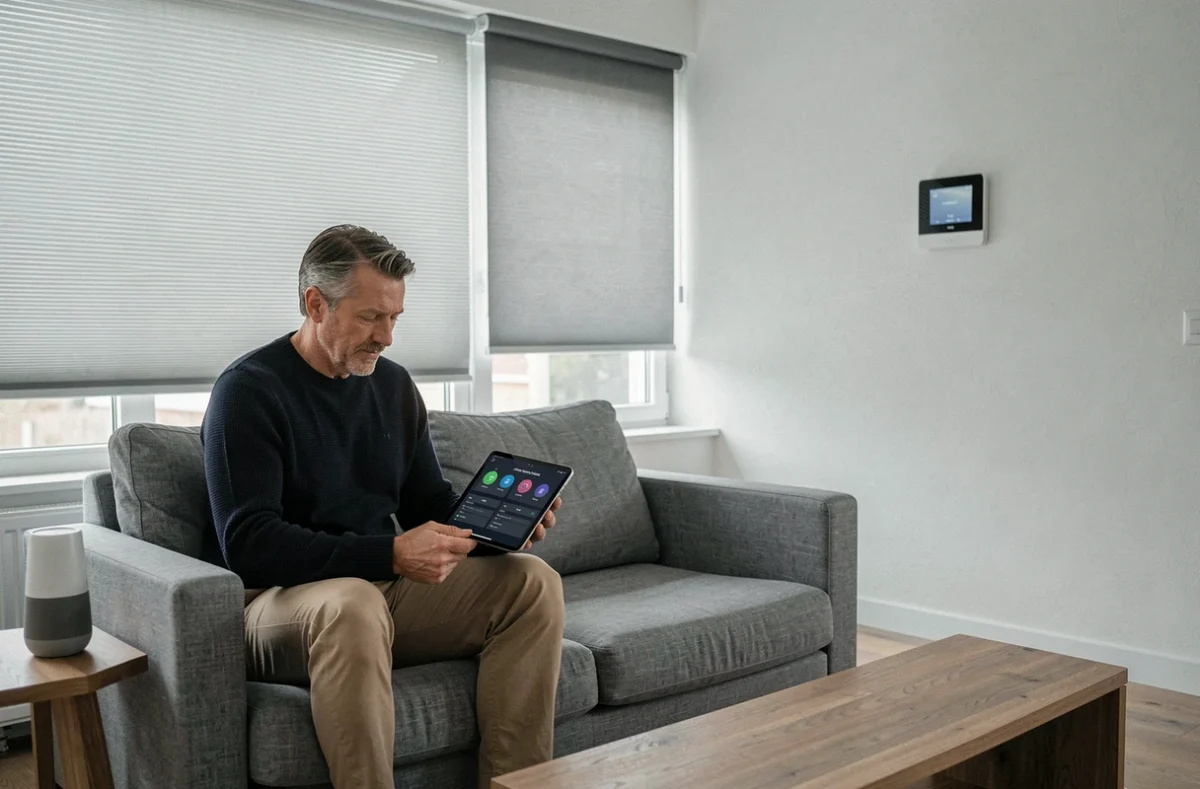
Cyber Resilience Act: the regulation filtering connected devices from 2027
The European regulation 2024/2847, known as the Cyber Resilience Act, will come into effect on December 11, 2027. It imposes security requirements throughout the entire lifecycle of digital products, including surveillance cameras, connected locks, routers, and voice assistants.
Manufacturers will need to document vulnerability management and guarantee security support for a clearly announced duration at the time of purchase. This point changes the economic calculation: a cheaper connected device without a commitment to software follow-up will become non-compliant.
Practical consequences on the choice of home automation equipment
Before this regulation, software security remained an optional marketing argument. The harmonized standards EN 18031, already applicable to radio equipment via the RED directive, cover authentication, data protection, and updates. The CRA extends this logic to all connected objects sold in Europe.
- Check the duration of security support announced by the manufacturer before purchase, not just the hardware warranty
- Prefer devices whose firmware can be updated remotely without physical intervention
- Isolate connected devices on a dedicated Wi-Fi network (VLAN or guest network) to limit the attack surface in case of device compromise
Network isolation is already recommended as a best practice by home cybersecurity specialists. A recent router allows creating a separate subnet in just a few minutes.
End of 2G and connected alarms: a forced renewal
Alarm and remote monitoring systems installed several years ago often use a 2G transmitter to communicate with the monitoring center. The gradual phasing out of 2G networks by operators renders these devices inoperative over time.
The affected installations must migrate to 4G or an IP connection. This is not a choice for improvement; it is a technical constraint. 2G transmitters do not automatically switch to another network: replacing the communication module is necessary.
Which security devices are affected
Wired alarms with old GSM transmitters, smoke detectors connected to a central unit via mobile network, and some intercoms in condominiums are among the most exposed equipment. In contrast, Wi-Fi connected cameras or Bluetooth locks do not depend on the 2G network and are not affected.
When replacing, opting for a 4G and IP compatible transmitter offers dual redundancy. If the internet box fails, 4G takes over, and vice versa. This is a criterion often overlooked during the initial installation.
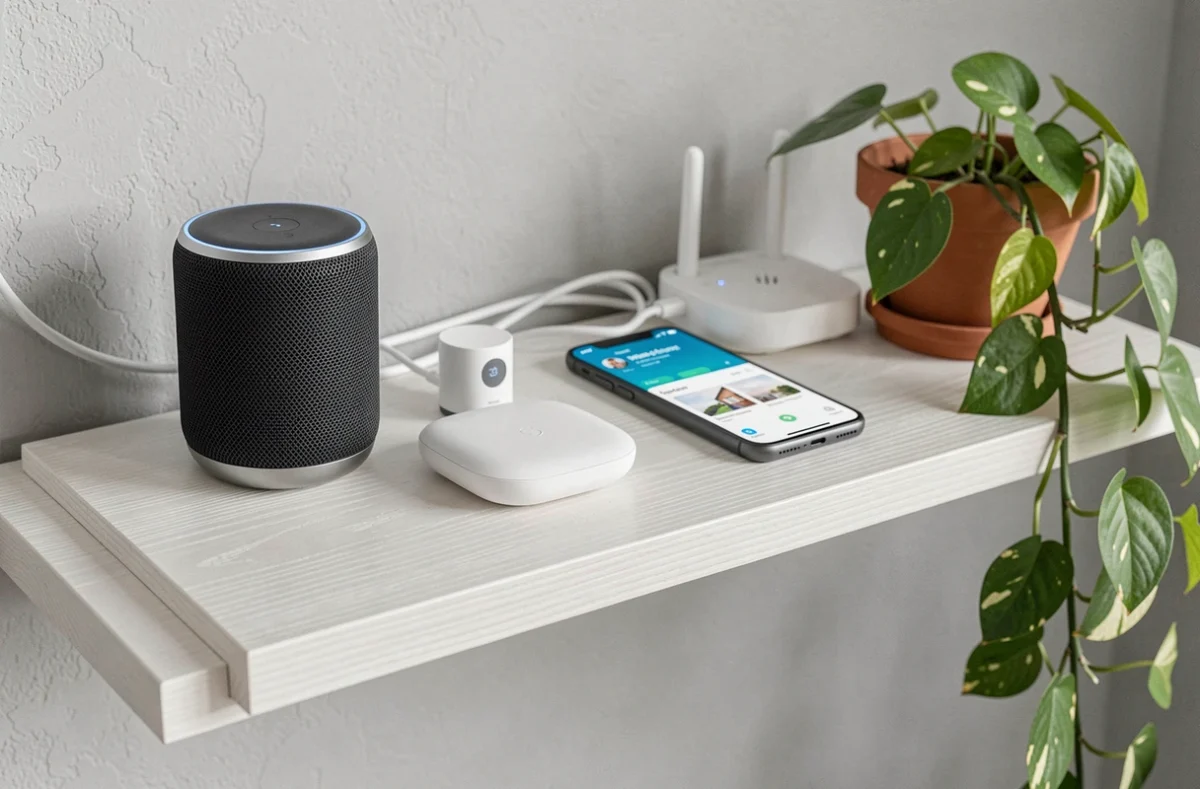
Smart home: compare protocols before features
Most buying guides categorize devices by type (lighting, heating, security). This approach masks the true differentiating factor: the communication protocol determines the longevity and scalability of a system.
A Matter-compatible connected thermostat will work with a Google, Apple, or Amazon voice assistant without reconfiguration. The same thermostat on a proprietary protocol will remain trapped in its ecosystem. The initial cost may be the same, but the replacement cost diverges significantly after a few years.
Connected objects compatible with Thread (a low-power mesh protocol integrated into Matter) offer another advantage: they communicate locally without relying on a cloud server. An internet outage does not paralyze the operation of home automation systems, which is not the case for products entirely dependent on the manufacturer’s cloud.
The market for connected home equipment is now structured around these regulatory and technical constraints. The choice of an open protocol and a manufacturer committed to software support weighs more than the number of features displayed on the packaging. Products that do not meet the requirements of the Cyber Resilience Act by the end of 2027 will simply disappear from European shelves.