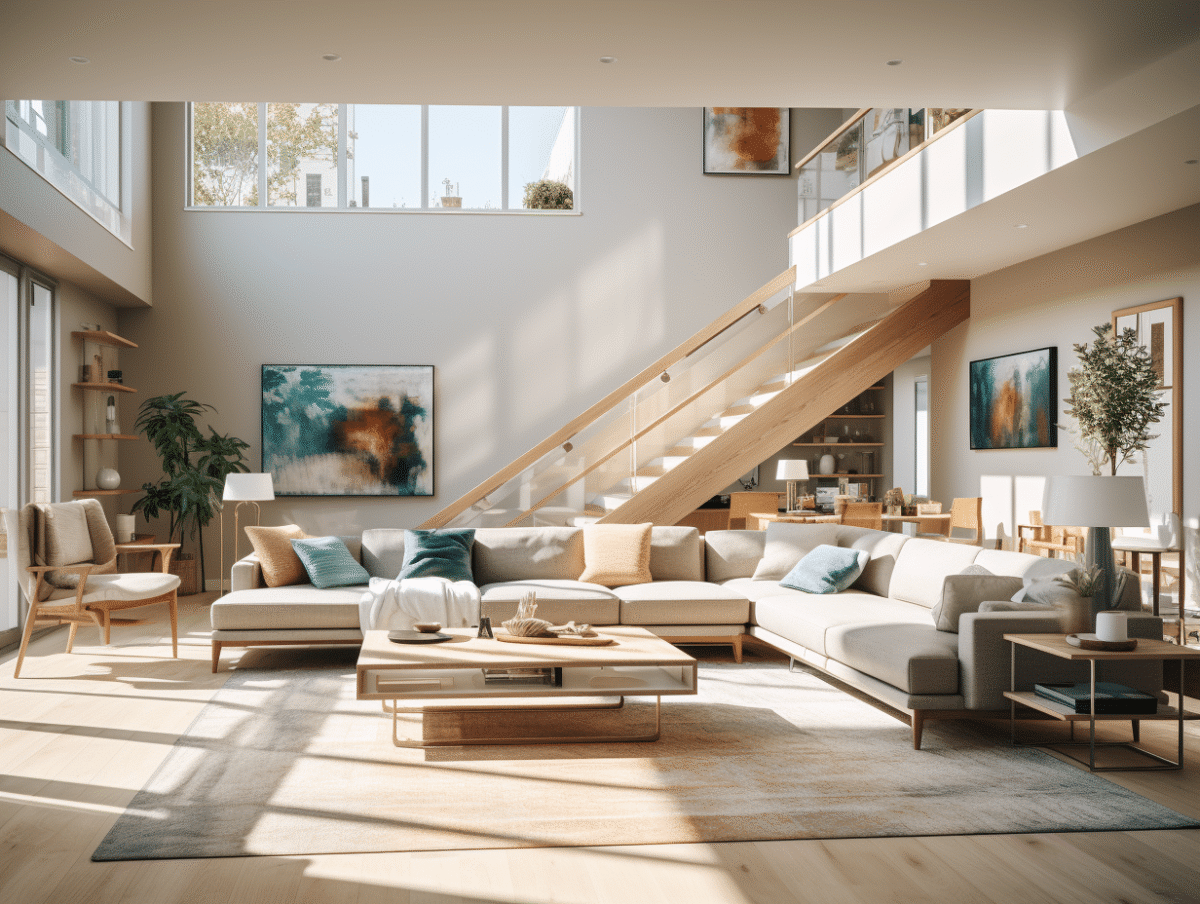
In the quest to create spaces that are both functional and aesthetically pleasing, architects and aspiring builders often face a major challenge: mastering volume. The art of manipulating the three-dimensional space of a structure is fundamental to influencing individuals’ perception and interaction with their environment. Various techniques, ranging from the manipulation of natural light to the strategic use of materials, can help sculpt the interior and exterior of buildings, thus offering a unique experience to its users. Here are some key tips for skillfully handling architectural volume, whether you are a professional or an enthusiast.
The fundamental principles for mastering volume in architecture
Calculating cubic meters is just one part of the equation for optimizing interior space. Volume, although measurable, is also perceived and experienced. The perception of this space can be greatly influenced by the use of colors. Neutral and pastel colors, for example, have the property of visually enlarging the space, thus giving an impression of lightness and openness.
Light also plays a crucial role in the understanding of volume. Natural and artificial lighting should be designed to create varied atmospheres and highlight shapes and textures. Adequate lighting can transform a confined space into a welcoming and spacious place. For this, architecture must integrate strategically placed light sources to accentuate ceiling height or room depth.
Beyond lighting and color, optimizing interior space is also a matter of layout and furniture. Low and light-colored furniture are allies in the quest for optimization, as they help create visual continuity and enhance the feeling of space.
Consider materials as key players in volumetric design. Textures, reflections, and translucency can all contribute to a richer spatial experience. The chosen materials influence the perception of depth and space, thus modulating feelings of openness or confinement. A judicious selection of materials can therefore multiply the desired effect on interior volume.

Strategies and practical tips for optimizing architectural space
In the quest for a harmonious architectural space, space planning becomes a science that combines aesthetics and functionality. Take into account the dimensions and shape of the space to determine the ideal layout. The distribution of furniture and decorative elements should allow for smooth circulation while creating distinct zones that enhance each function of the room. This thoughtful arrangement gives the room a visual balance and maximized utility.
Interior decoration is another essential component. It incorporates furniture, which, beyond their primary function, play a crucial role in the perception of space. Low and light-colored furniture, for example, is recommended to optimize volume within. They anchor the decoration without visually overwhelming the space, allowing the volumes to breathe.
As for the choice of materials, it directly influences the perception of depth and space. Favor materials that capture and reflect light to enhance the feeling of expansiveness. Glossy or semi-gloss surfaces, glazing, or light textures can alter the spatial experience, adding an extra dimension to the room. The coherence of the materials with the overall architectural concept ensures a successful aesthetic and spatial experience.