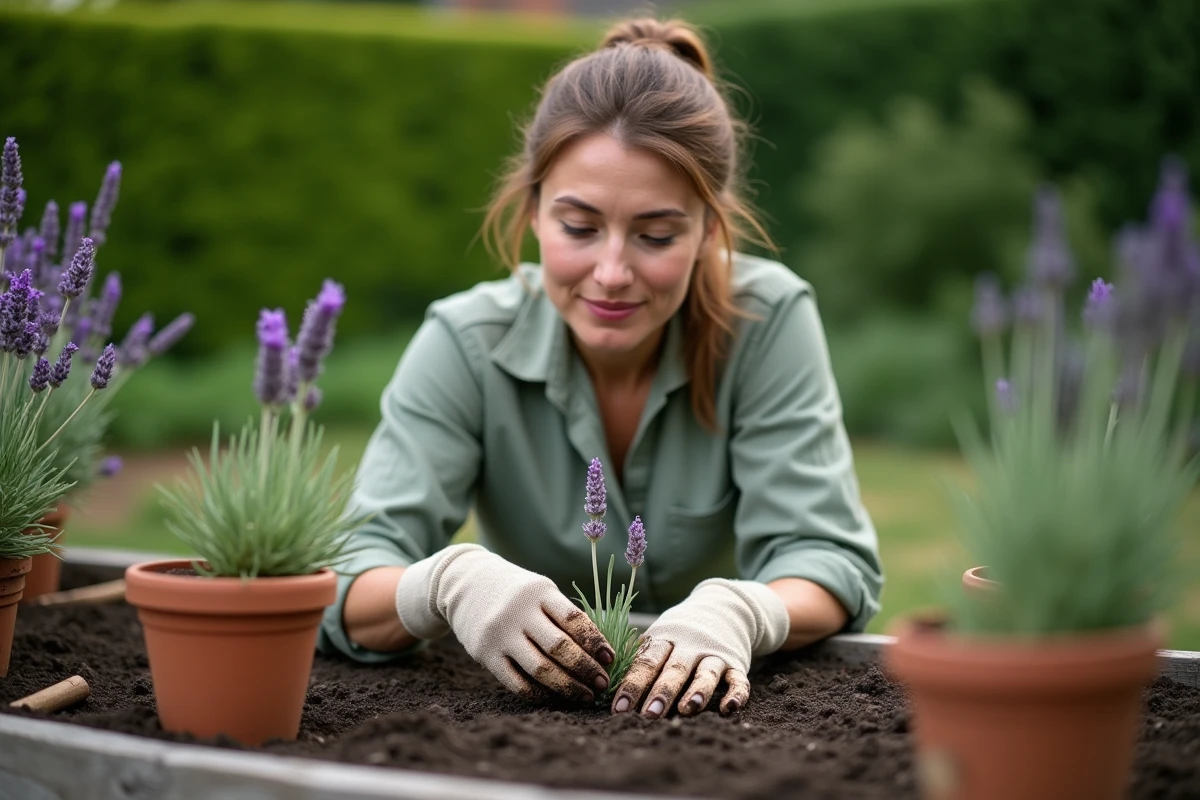
A mass of perennials planted in poorly drained clay soil will not survive its first winter. Before flipping through a catalog or splurging at a garden center, it’s more efficient to start with what you have underfoot, not what you see in photos.
Drought-resistant flowers: the criterion that guides overlook
Most gardening advice stops at exposure and soil type. There is rarely mention of watering restrictions that recur every summer in much of France. When the prefectural order is issued, water-hungry annuals can wilt in just a few days.
The French Office for Biodiversity has been recommending since the mid-2020s to favor Mediterranean and xerophytic perennials in ornamental gardens. Gaura, nepeta, ornamental sages, yarrow, erigeron, lavender, euphorbia: these species can thrive without watering once well-rooted and remain very decorative.
You can also find flowers and advice on Info Jardinage that detail the varieties suited to each region. The idea is not to give up on colors but to create a bed that withstands heatwaves without intervention.
A garden planted exclusively with petunias and impatiens requires daily attention in summer. Replacing half of these annuals with water-efficient perennials cuts maintenance time in half without sacrificing visual impact.
Soil and exposure: test before planting flowers
People often plant by instinct, then wonder why the lavender is rotting or the hydrangea is yellowing. Two quick checks can prevent most failures.
Assess drainage in five minutes
Dig a hole about thirty centimeters deep and fill it with water. If the water still stands after half an hour, the soil is poorly drained. Rock garden flowers (aubrieta, sedum, creeping thyme) will perish there. Astilbes or ligularias, on the other hand, will thrive.
Map the actual shade
The shade cast by a wall or tree changes radically between June and September. Note the sunny areas at three different times of the day over a week. This rough map allows you to position plants correctly from the start, without having to move them the following year.
- Full sun (more than six hours a day): lavenders, gauras, sages, echinaceas, rudbeckias.
- Partial shade (three to five hours of sun): perennial geraniums, heucheras, columbines, foxgloves.
- Dense shade (less than three hours): hostas, ferns, periwinkles, brunneras.
Planting calendar: perennials, bulbs, and annuals at the right time
Planting at the wrong time is the second leading cause of failure after poor location. The calendar varies depending on the type of flower, not the gardener’s desire.
Perennials are ideally planted in the fall. The still-warm soil encourages rooting before winter. In spring, the plant starts off with an established root system and better withstands the first heat.
Spring-flowering bulbs (tulips, daffodils, crocuses) should be planted between October and December. Summer bulbs (dahlias, gladiolus, lilies) wait until after the last frost, usually in April or May depending on the region.
Annuals bought in pots should be planted after the ice saints, around mid-May. Planting them too early risks a late frost that can destroy the entire batch overnight.
Flower maintenance in the garden: actions that change blooming
It is often said that you need to water, mulch, and remove faded flowers. This triptych is correct but incomplete. Some lesser-known practices make a real difference in the duration and intensity of blooming.
Mineral mulching for Mediterranean perennials
Organic mulching (bark, straw) retains moisture, which is suitable for hydrangeas or hostas. For lavenders, sages, and nepeta, mineral mulching (gravel, pumice) prevents excess moisture at the collar, the leading cause of winter rot in these species.
Remove faded flowers at the right spot on the stem
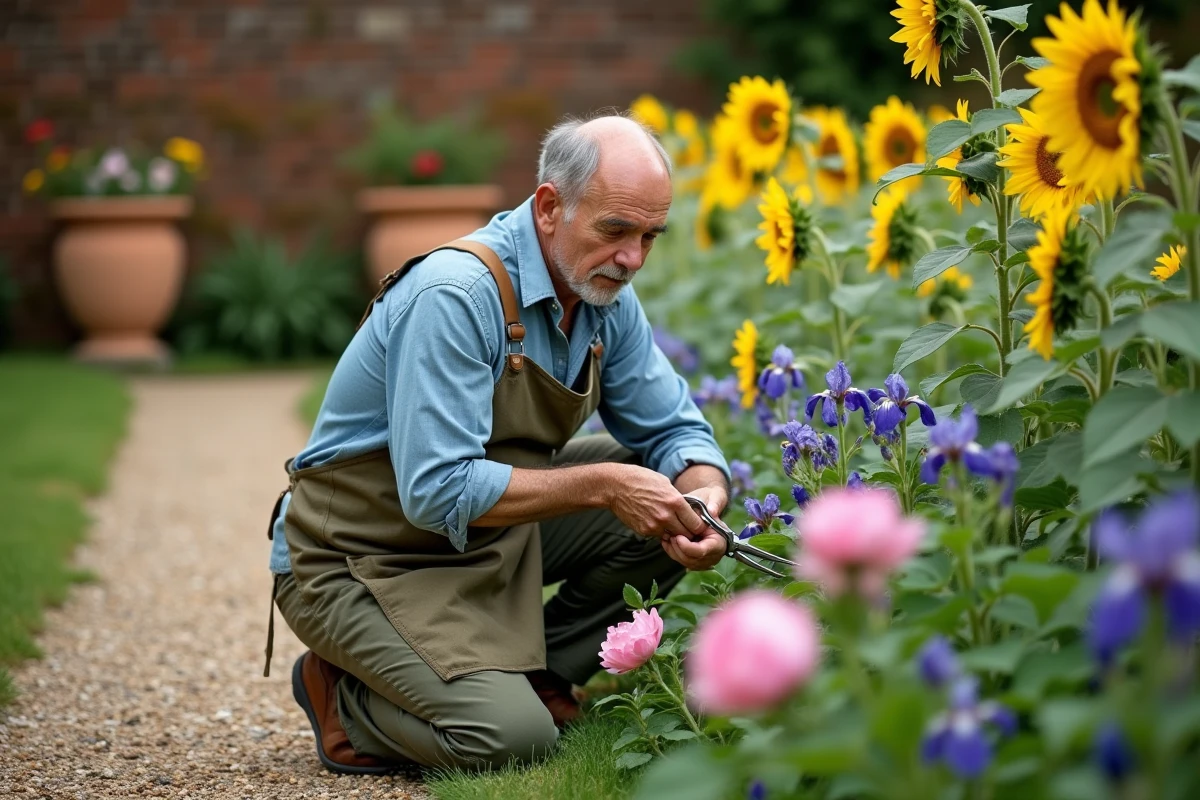
On a rose bush, cut above the second leaf with five leaflets below the faded flower. On a sage, cut the entire spike back to the basal foliage. On a perennial geranium, wait until the entire clump has finished blooming, then mow it down: the regrowth often produces a second bloom in late summer.
- Annuals (petunias, cosmos, zinnias): remove each faded flower individually to extend blooming until frost.
- Single-spike perennials (delphiniums, lupins): cut the spike after blooming. Adding compost encourages a regrowth.
- Ground-cover perennials (aubrietas, perennial geraniums): mow down after the first wave of flowers.
Fertilization depends on the soil. In already rich soil, an application of compost in the fall is sufficient. In poor, sandy soil, a slow-release organic fertilizer in spring gives a visible boost within weeks. Feedback on this point varies by region and local conditions.
A flowering garden that lasts relies on three choices made in advance: species suited to the soil and local climate, planting at the right time, and maintenance tailored to each type of flower. The rest is observation season after season.