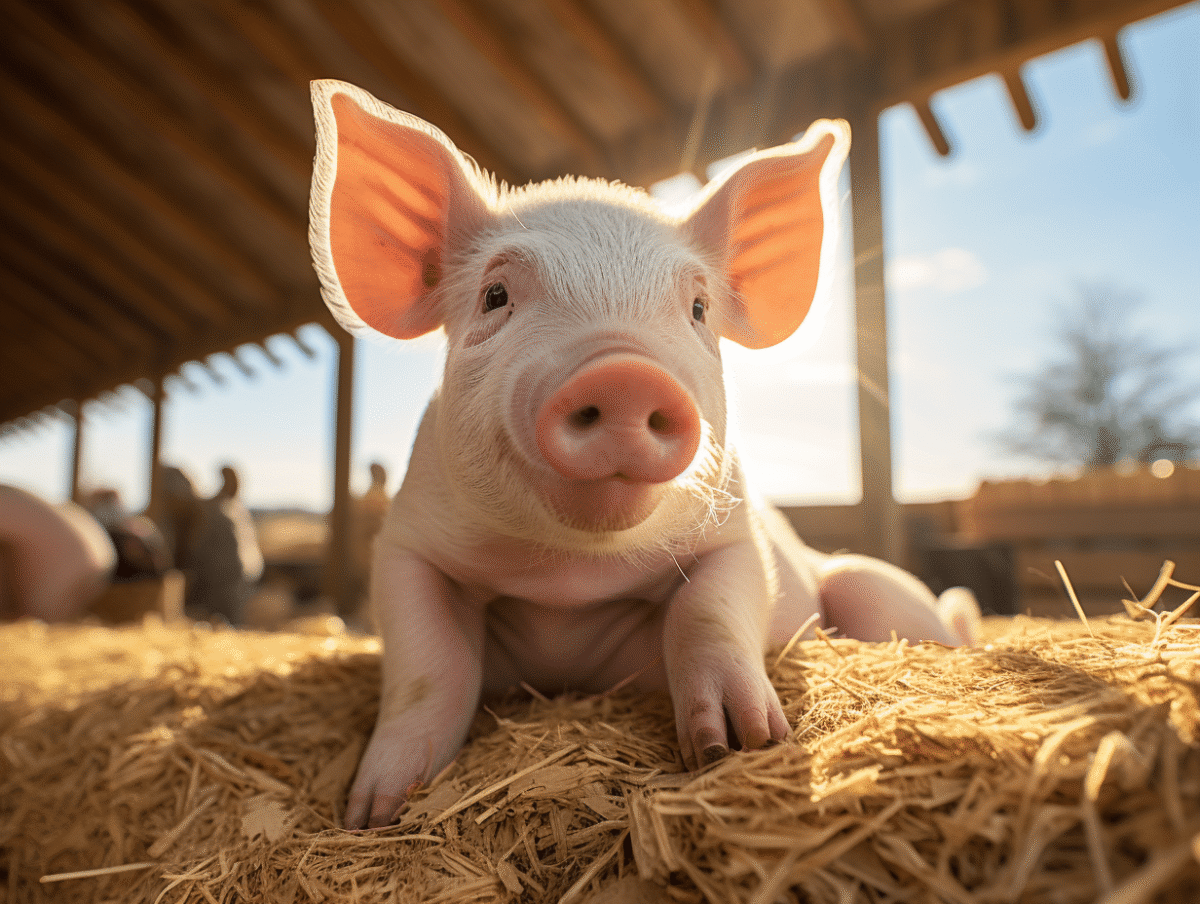
The image of the pig often evokes dirt and disorder, a creature wallowing delightfully in mud. Yet, behind this reputation lies a completely different behavioral reality. Contrary to popular belief, the pig is a particularly meticulous animal in its natural habitat. Ethological studies reveal a social organization and cleanliness that may surprise. This animal, often confined to small spaces by intensive farming, shows in a larger environment a sense of hygiene that defies stereotypes. This contrast raises the question: is the cleanliness of the pig a myth or an unknown reality?
Cleanliness behaviors in pigs
Understanding why the pig is a clean animal requires an immersion in its daily habits. Far from the widespread image of the animal indulging in dirt, the pig displays a multitude of behaviors that testify to rigorous hygiene. Mud baths, often mistakenly interpreted as a sign of filth, are actually a method of self-care. These baths play a key role in protecting their skin from parasites and sunburn. Far from being an act of negligence, it is a sophisticated body care strategy.
The social life of pigs also reveals a meticulous spatial organization of their environment. These animals carefully choose distinct areas for feeding, resting, and relieving themselves. Such separation of spaces demonstrates a natural instinct for cleanliness and comfort, far removed from clutter and dirt. The surprising cleanliness of the pig thus becomes evident when observing these practices, refuting the preconceived notion of an animal indifferent to its hygiene.
The notion of a clean pig is not a fantasy; it is supported by precise behavioral observations. Animal behavior specialists highlight the pigs’ ability to maintain an orderly environment, revealing intelligence and awareness of their living space. Both domestic and wild pigs exhibit a cleanliness that deserves recognition and appreciation, far from clichés and misconceptions.
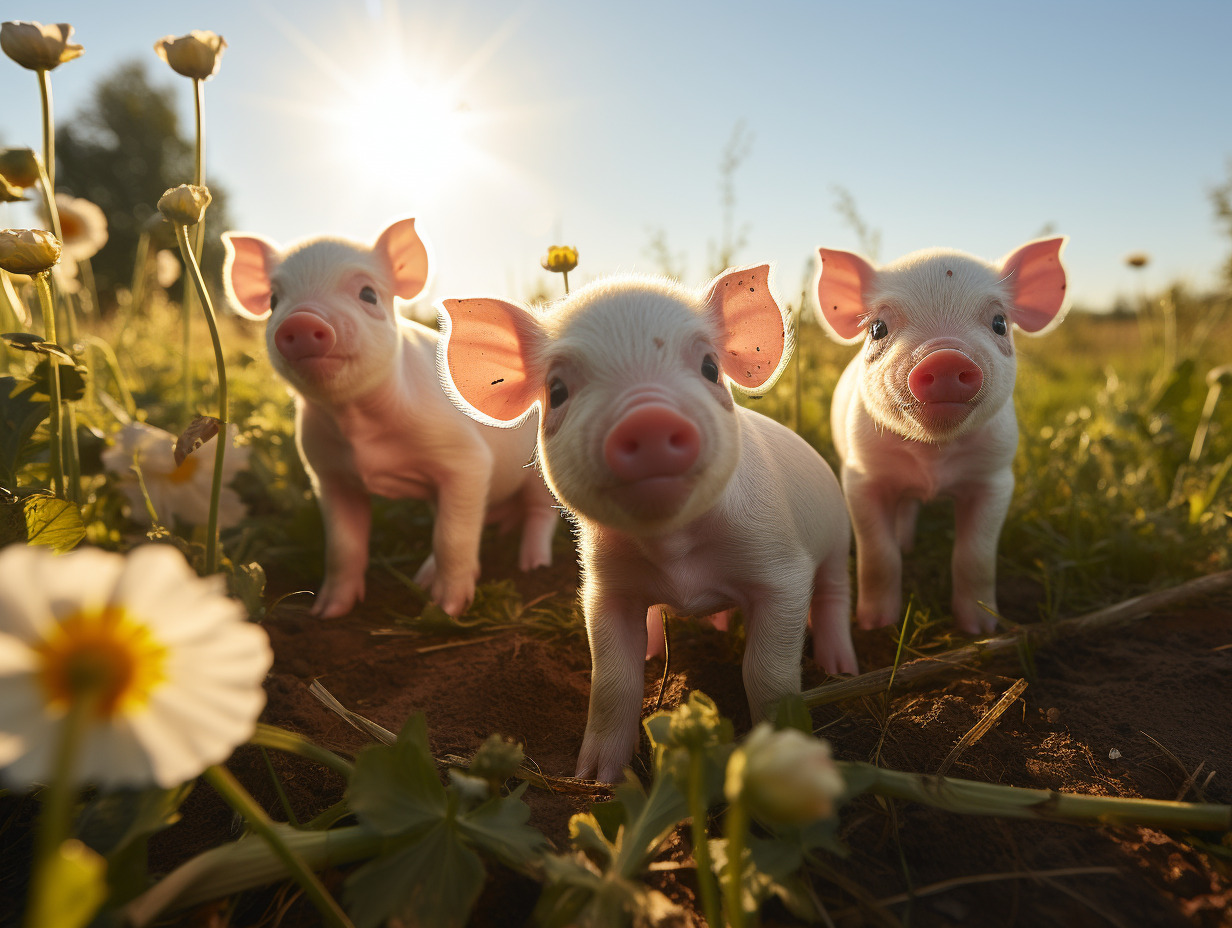
The pig and intelligence: beyond myths
Going far beyond the question of cleanliness, the pig also stands out for its remarkable intelligence. Researchers have observed behaviors in these animals that resemble those of humans and certain mammals known for their cleverness. The pigs’ ability to play video games, for example, has been highlighted in various studies, underscoring their aptitude for understanding abstract concepts and manipulating devices with precision.
The spatial memory of the pig, often compared to that of a three-year-old child, demonstrates its skill in navigating its environment effectively and intentionally. This ability, coupled with a developed episodic memory, allows the pig to remember specific events, anticipate situations, and even show signs of empathy and compassion towards its peers.
In the social life of pigs, one can detect emotional intelligence manifested through complex interactions and play behaviors. Pigs establish social bonds, help each other, and can even demonstrate ingenuity in problem-solving. Traits that make them, for some, ideal candidates as pets.
Erik Orsenna, a French writer, has not failed to pay tribute to the intelligence and emotional richness of these animals in his praise of the pig. This literary recognition supports scientific discoveries, placing the pig in a position of respect and fascination that it rightly deserves. By deconstructing the myths, we discover an animal with cognitive and emotional capacities far more complex than previously imagined.